Where did you come from, Cotton-eyed Joe?
In Defense of Our Anthem: Two Dickenson seasons, a geriatric tuba player, three Swedish producers, a fat man in overalls, and thirty years of celebrations. Play the song, Kent.
I saw “cringe” and “played out” and “glad it didn’t play” online this week, all younger fans. They don’t know it’s not just a song, and I don’t blame them.
I was three years old in 1995, right as the song was becoming a staple at Washington-Grizzly. I have no memory there without it, and only a vague sense why.
I set out to learn.
A Swedish group, the Rednex, released a remix in 1994. It went to No. 25 on the Hot 100 in 1995, and then disappeared; gone everywhere except the few places that kept it.
The release coincided with two autumns which combined for 18 straight home wins and zero home losses. In those, 808 points for the good guys, 288 for the foe. Capped off as national champs. Somewhere during that time the Swedish pop song started playing in jubilant fourth quarters, and it hasn’t stopped. Until this season.
Bill Foley is a familiar sports writer to Montanans. The UM graduate shared his recollection of how it all started:
“The song has nothing to do with the Grizzlies or Montana, but it became a staple of Griz games when they started playing it during Dave Dickenson-led blowouts in 1994 or 1995 at Washington-Grizzly Stadium. To many Griz fans, that song immediately brings back memories of the best football days in school history.”
1994: The game everybody remembers and nobody can name
Ask around and somebody will tell you it started with a comeback. The Griz were losing, somebody put it on, the building came apart, we won. It always happened about twenty-something years ago and the teller is always sure. Nobody can name the game.
The night that is actually on paper is December 3, 1994, the quarterfinal against McNeese State, up 27-7 after three quarters and then giving away twenty-one points in the fourth. Foley was in the stands:
“Griz coach Don Read called a late time out, and the Montana band jumped to its feet. For the first time of the game — and perhaps the season — the band played the song ‘Montana.’”
“Shortly after the band played that song and the entire stadium sang along, the Grizzlies stopped Henry Fields, McNeese State’s all-time leading rusher, on a fourth-down-and-1 at the Grizzly 12-yard line.”
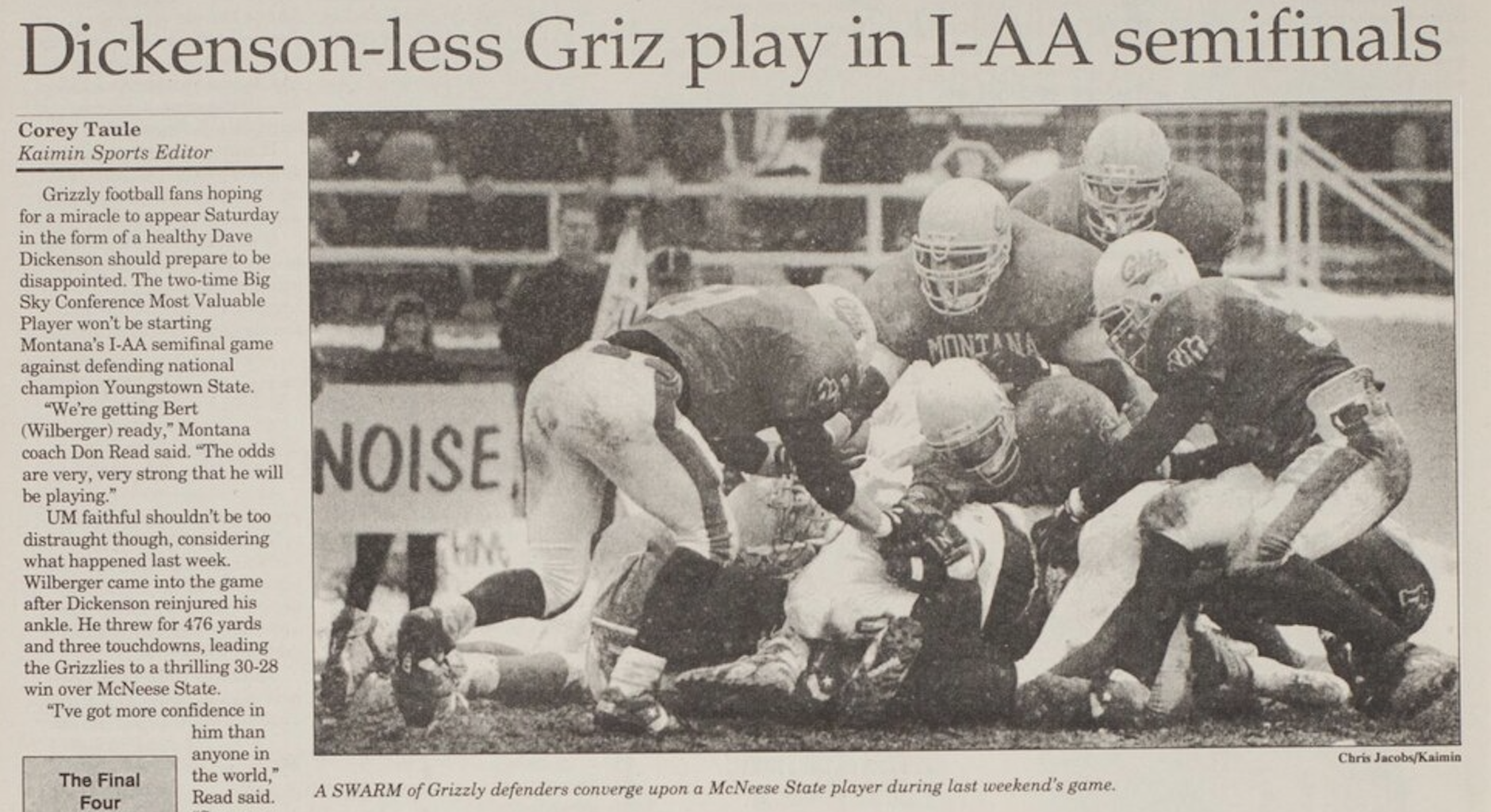
Andy Larson, in what may have been the first of his many storied game-winning kicks, made a field goal with eight seconds left; 30-28 good guys. A song, a stop, a comeback. Foley wrote down the state song, played live by the band. Two songs, one night, and then a championship year of the fiddle. Maybe memory fused them. The one that survived in the telling is the one everybody could do the steps to.
1995: Nobody chose it on purpose
There was no meeting. No moment in the program’s history where anyone decided that this will be our song. I looked.
What exists instead is a Kaimin column from October 25, 2000, by a student named Ryan Divish, who was writing a piece demanding somebody stop playing “Who Let the Dogs Out” (no argument here Ryan; but my 8 year-old self disagreed) in which he left behind an account of how the other one got started:
“And when it first started being played at home games, “Cotton-Eye Joe” followed the Montana three-month rule that comes with popular music: A song becomes popular in Montana roughly three months after it was popular everywhere else … well, except North Dakota.”
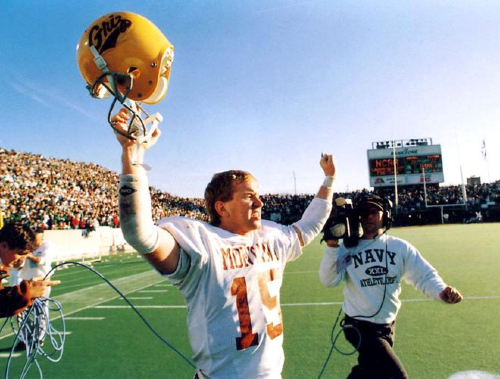
Three months after its peak on the Hot 100 was August 1995. Serendipity entered it into the Griz consciousness amidst 18 straight home blowouts. Somebody in the booth put on a recent hit record that is two-thirds fiddle. The students already knew the steps, so they did the steps, and then they did them again. Do that through a home semifinal run and a national championship and you are not just playing a song anymore. Nobody involved had noticed yet.
By the time Divish wrote it down, five years in, it was finished business. He liked it “because it’s a small tradition. They’ve been playing it for a long time and it’s as much a part of Griz games as the smoke in the tunnel when the players run on the field.”
1998: A Homecoming comeback win
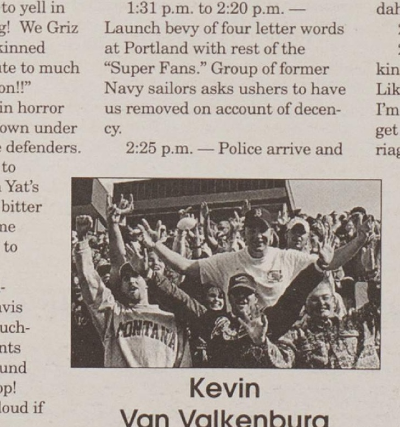
The oldest surviving account I could find of the song’s use is Kevin Van Valkenburg’s minute-by-minute diary of a game published in the Kaimin.
At 12:47 he records his friend “King George” had yielded his group’s normal seats to the “Geritol-abusing alumni band,” and offers “to arm wrestle for seats with female clarinet player.” He loses. At 12:55 he settles for “seats behind alumni band” and wonders what will happen when Doug, the alcoholic football enthusiast, “lets the first of many F-bombs fly amidst 70-year-old ears.”
Some things never change. The game:
1:08: Brian Ah Yat — Keali’i’s dad — goes down “under pile of green and white defenders.”
3:50 p.m. — Backup QB Sean Davis finds Jeremy Watkins for the winning touchdown with seconds left. The “Super Fans,” Superman, Greeks, Groupies, Dance Team, Alumni Band and foolishly intoxicated students erupt in cheers, hugging and crying.
And then, the song:
3:51 p.m. — To the horror of many, I dance a jig to “Cotton-Eyed Joe” while standing on the thin metal bleachers, and knock over a Charlton Heston lookalike and his tuba.
A few minutes later he storms the field. Final 20-17.
The first appearance in print at Washington-Grizzly is a backup QB’s Homecoming winning touchdown, a jig, and a flattened tuba player. (Kevin may have also contributed to the later removal of those thin metal bleachers in the student section).
1999: An institution in print
Four years after a Swedish studio project put it on a CD, students in Missoula were using it as shorthand for the building.
That April the graduation issue ran a board game. One of the squares was the stadium:
“Lets face it, Washington Grizzly Stadium is a death trap. Whether you’re puking in the restroom, taking a header down the stairs or turning an ankle during “Cotton-Eyed Joe,” the football players aren’t the only ones getting hurt out there.”
In October a sophomore named Kenneth Hebert wrote a letter defending the atmosphere against people who found the crowd loud and obnoxious:
“Or how about when that damned “Cotton Eye Joe” song comes on over the P.A. and everybody goes apeshit. Beautiful!”
A week later a senior named Courtney Beebe ran a satirical letter about the Homecoming queen race. The band must delight us. The beer must flow. And the queen’s “Cotton Eye Joe” jig “must be the envy of all.”
On October 23, in the gameday tab, the perfect Saturday in Montana: “Tyler Martin gets four sacks. ‘Cotton Eye Joe’ rings throughout Washington-Grizzly Stadium and the crowd goes nuts.”
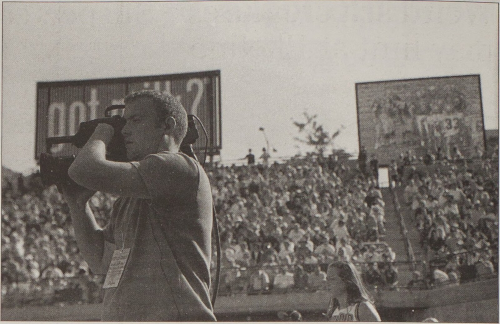
I referenced three UM grads’ reflections on the origins of the song at Washington-Grizzly, and all three of them still do it for a living. Van Valkenburg went to the Baltimore Sun and then ESPN. Divish is a Havre kid who has covered the Seattle Mariners for the Seattle Times since 2014. Foley took the Montana Standard job in 1998 and never stopped. Nobody in the athletic department was keeping this record. Student journalists were, on their way out the door, without knowing they were keeping it.
2003: The game isn’t over until the fat guy dances
Chris Rodkey, writing in the Gameday Kaimin paper you used to be handed as you walked toward the stadium, said about student-section behavior: “Stadium celebrity Jason Jury, whose ‘Cotton Eye Joe’ jig has landed him at least two commercials in Missoula, says he doesn’t need alcohol to enjoy the game.” A large man in Carhartt overalls, front row of the student section. He did the dance every week. Griz Vision found him every week. Two local commercials out of it. From an eGriz poster in December 2002: “God, Ya gotta love that man and his carharts! If he isn’t Montana, I don’t know what is.”
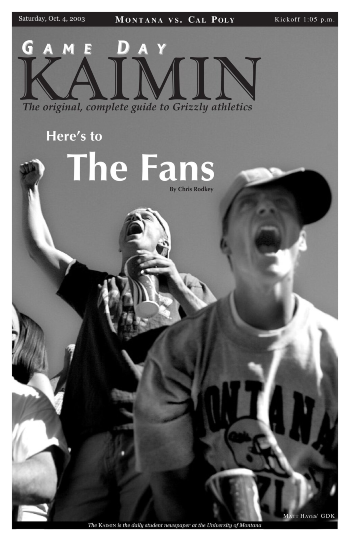
He faded out around 2005. Somebody who worked on the Griz Vision crew said Jury had taken a job that put him on Saturdays. Somebody else filled in that he was a case manager at Missoula Correctional Services and would try to swap shifts once or twice during the season. He never came back.
Years later a fan remembered what the west side used to holler across at the students when the fiddle started: the game isn’t over until the fat guy dances. Maybe Jason is still out there and ready to reprise his role?
2006: Get the crowd into it
The man who actually pushed the button is Todd Mackey. The Kaimin profiled him on September 23, 2006. Anaconda kid, Coast Guard, eight years doing DJ work in Missoula bars, then the soundboard in the press box control room.
A defensive stop cues one thing. Third down cues another. Mackey: “We’re like the 12th man. It’s our job to motivate the players and get the crowd into it.”
The players noticed too. An eGriz poster in 2015, after two straight touchbacks: a certain former All-American kicker used to request Cotton-Eyed Joe right before his kickoffs. Somebody in the same thread put the record at hearing it four times in a single game and asked for five.
2017: It used to mean we had won
For its first fifteen years this was a victory lap. The 2006 Kaimin calls it a “second half stretch” song. A fan asked in 2006 to list the gameday traditions gave “the whole staduim dancing and singing to ‘Cotton Eyed Joe’ when we are way ahead.” In 2008: “usually played when the game is well in hand.” In 2009: “it seems that anymore it has been reserved for the 4th quarter.”
Then it changed jobs, and nobody voted on that either. For a long time the Griz blew teams out. During the Delaney years and the oh-no stretch that followed, we spent a lot of fourth quarters trying to coax wins out of mediocre teams. A victory lap does not have much work to do there. So we started using the song when the building still needed it. By November 2017 the Kaimin was printing that version as settled fact:
“At the most tense moment of the game, expect “Cotton Eyed-Joe” to blast from the loudspeakers and the fans to go nuts, and after a Griz score, keep your eyes out for fans tossing Twinkies.”
Same song. Same building. New job. The sound booth followed the room.
Pre-Civil War: The South
The song the Swedes remade is much older, and Black. “Cotton-Eyed Joe” ran in the Saturday Evening Post in 1875. Harper and Brothers printed a version in 1882. In 1884 the Firemen’s Magazine called it “an old, familiar air,” which is what you call something already old. Nobody has ever established exactly what “cotton-eyed” means.
Montana played its first football season in 1897 and won exactly one game, against Montana State. The song already had fifteen years in print by then. What comes out of those speakers in the fourth quarter is an Arctic dance remix of a tune older than the stadium, older than Grizzly football, older than the state itself.
Thomas Talley collected a version of the song in 1922, and Talley is worth knowing: born in Shelbyville, TN to parents who had been enslaved in Mississippi, he went on to chair Fisk University’s chemistry department for 25 years. His Negro Folk Rhymes was the first collection of Black secular folksong ever assembled by a Black scholar.
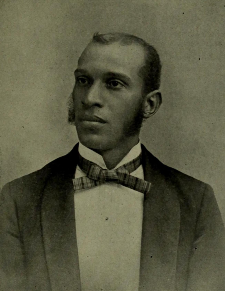
Talley filed Cotton-Eyed Joe under dance rhymes, and in his version the dance itself is what keeps a man alive: he would have been dead seven years ago if he had not danced that Cotton-Eyed Joe. Celebrating with it in our fourth quarters is not an insult to that history. It is the history.
2026: Our connective tissue
We’ve seen good changes to the programming this year. A tunnel camera. It was long past time for Bring ‘Em Out to go. Divish asked for Thunderstruck in that same 2000 column, and it got bid farewell in 2026. No disagreement here. Those are entertainment. This is different.
A poster in 2007 called it “a classless redneck song” that “only confirms with many opposing teams their feeling that we are a bunch of yay-hoos up here in Montana.” Divish admits he spent a few years despising it before he came around. Somebody in 2025 said “the old Cotton Eye Joe just ain’t gettin’ it no more.”
Nobody in that group then or now is wrong about the music, per se. It is a dated song. I do not listen to it in my car. That is not what it is for.
You do not rate a hymn. Nobody walks out of a church and says the melody was derivative, because the melody was never the point. A hymn is a thing a room agrees to do together, out loud, at the same time. The tune is a container. What people put in it is three decades of Saturdays.
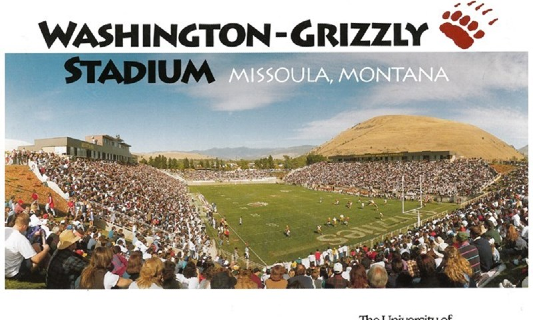
Our song is a celebration of joy. We are not telling anybody to eat shit. We are not taunting anyone. We are doing a jig to a techno-pop record, maybe on a frigid Montana night. None of it makes sense and none of it has to. That is what turns a song into something else. For thirty seconds the building does the same stupid thing at the same time, and everybody who has been there before is briefly in the same year. Feeling, exuberance, history, all of it at once, and then the play clock starts again. That is why we go. That is what is at stake.
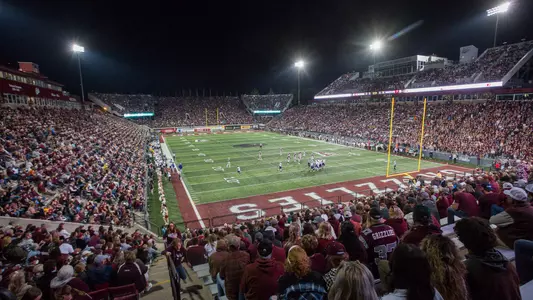
In some musical sense 1995 just happened. So did 1998, 2003, and 2009, 2017 (yikes), and 2023, and now. Connective tissue. We cannot recreate it and we cannot delete it.
Is it ridiculous that the vehicle for that is a Eurodance record built by three men in an Arctic mining town who had never seen Montana in their lives?
Yes. But is it, really, anymore?
Nobody voted for the smoke in the tunnel. Nobody voted for yelling MONTANA back at a man who yells first down. Traditions do not get chosen. They get survived. A tradition is what is left standing after everybody who was embarrassed by it gave up and joined in, and the only way to get one is to keep doing the embarrassing thing for thirty years in front of the same twenty-six thousand people.
I was three when it got here. I did not choose it, and neither did you, and neither did anybody, which is how we know it is ours. It stopped being a song a long time ago. What it is now is the Washington-Grizzly hymnal.
Tell them to play the song, Kent.
Go Griz